
MitraClip Procedure in Mumbai
Minimally Invasive Treatment for Mitral Valve Regurgitation
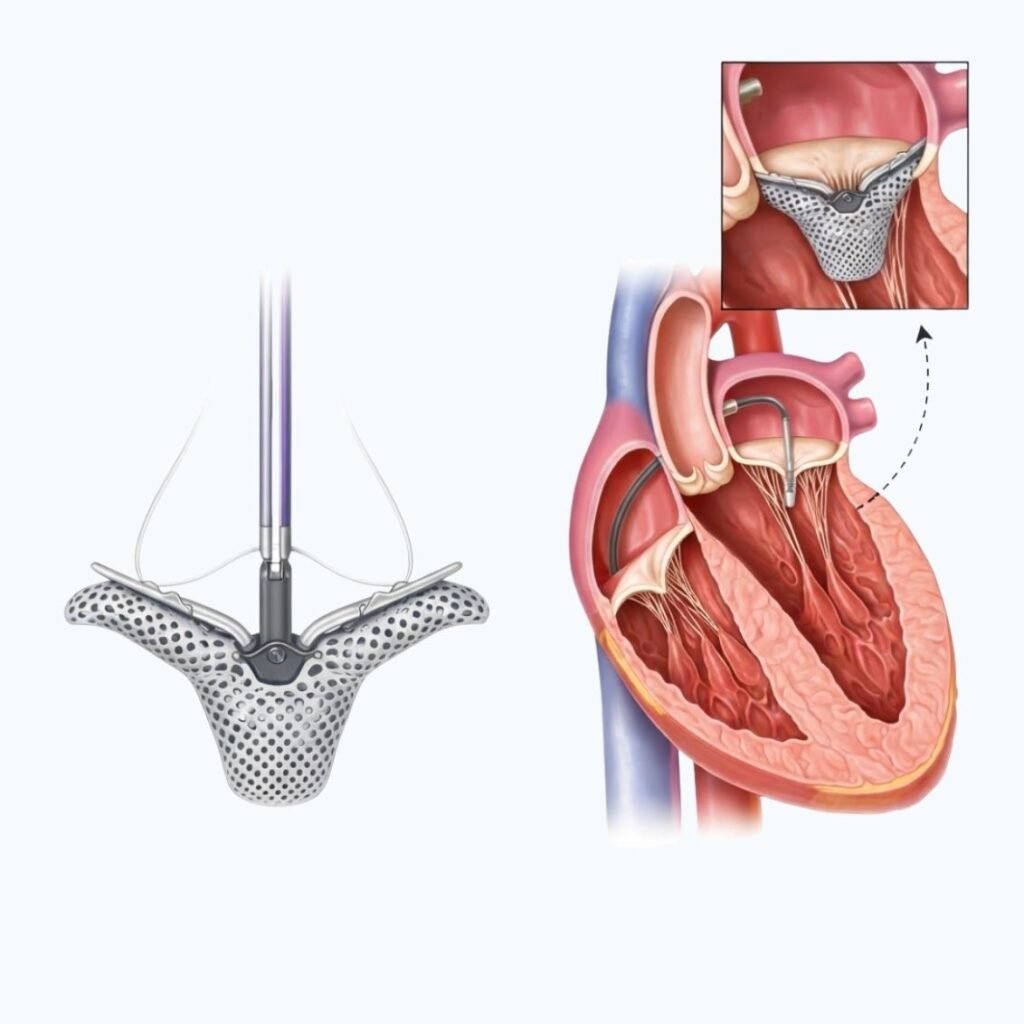
MitraClip is an advanced, minimally invasive treatment option for selected patients with significant mitral valve regurgitation (MR). Instead of conventional open-heart surgery, MitraClip—also known as transcatheter edge-to-edge repair (TEER)—uses a catheter-based approach to bring the mitral valve leaflets closer together and reduce backward leakage of blood.
For patients who are at high or prohibitive risk for conventional mitral valve surgery, or for appropriately selected patients with secondary mitral regurgitation despite optimal medical therapy, MitraClip may provide an alternative treatment option. Patient selection is made by a multidisciplinary heart team after detailed evaluation.
Dr. Gulshan Rohra, Cardiothoracic Surgeon in Mumbai, has MitraClip listed among his areas of cardiac expertise, alongside valve repair and replacement, TAVI, minimally invasive valve surgery and complex cardiac procedures.
What Is the MitraClip Procedure?
MitraClip is a transcatheter mitral valve repair procedure.
Instead of opening the chest to access the heart, the MitraClip device is delivered through a catheter, typically through a vein in the groin, and guided to the mitral valve.
The clip grasps the mitral valve leaflets and brings them together, helping reduce the amount of blood that leaks backward through the valve.
The goal is to reduce mitral regurgitation and improve the patient’s symptoms and cardiac function, when the procedure is clinically appropriate.
MitraClip therapy is performed by an experienced multidisciplinary heart team, which may include interventional cardiologists, cardiac surgeons, cardiac imaging specialists, anaesthesiologists and other cardiac-care professionals.
Who May Benefit From MitraClip?
MitraClip is not appropriate for every patient with mitral valve disease.
It may be considered for carefully selected patients with significant symptomatic mitral regurgitation, particularly when conventional surgery carries a high or prohibitive risk.
The suitability of MitraClip depends on factors such as:
- Severity of mitral regurgitation
- Type of mitral regurgitation
- Mitral valve anatomy
- Heart function
- Symptoms
- Previous cardiac procedures
- Age and overall health
- Other medical conditions
- Risk associated with conventional surgery
- Response to appropriate medical treatment
For secondary or functional mitral regurgitation, specific clinical and heart-function criteria may apply, and treatment decisions should be made by an experienced multidisciplinary heart team.
MitraClip for High-Risk Patients
One of the important applications of MitraClip is for selected patients who may face substantial risks from conventional mitral valve surgery.
This may include some patients who are:
- Elderly
- Medically high-risk
- Living with multiple medical conditions
- At increased risk from open-heart surgery
- Previously operated on the heart
- Experiencing significant symptoms despite medical management
However, being considered “high risk” alone does not automatically mean that MitraClip is appropriate. Detailed imaging and heart-team assessment are essential.
Benefits of MitraClip
For appropriately selected patients, MitraClip can offer several potential advantages compared with conventional open-heart mitral valve surgery.
Minimally Invasive Approach
MitraClip is performed through a catheter rather than requiring conventional open-heart access.
No Conventional Sternotomy
The procedure does not require opening the breastbone as in traditional open-heart surgery.
Potentially Shorter
Recovery
It is a catheter-based procedure, recovery can be less extensive than conventional surgery
Reduction in Mitral Regurgitation
The primary objective is to reduce the amount of blood leaking backward through the mitral valve.
Mitraclip Procedure in Mumbai – Expert Cardiac Evaluation
eart valve disease can sometimes progress gradually. Symptoms may include:
- Breathlessness, particularly during activity
- Fatigue or reduced stamina
- Chest discomfort
- Palpitations
- Dizziness
- Fainting
- Swelling in the legs or ankles
- Difficulty exercising
- Shortness of breath while lying down
Some people may have significant valve disease without obvious symptoms. Regular cardiac evaluation can therefore be important when valve disease is suspected or already diagnosed.
Get Expert Evaluation for Heart Valve Disease in Mumbai
Living with significant mitral regurgitation can affect breathing, energy levels and everyday activities. For selected patients, MitraClip may provide a minimally invasive approach to reducing mitral valve leakage without conventional open-heart valve surgery.
If you have been diagnosed with significant mitral regurgitation, have been advised to consider MitraClip, or want to understand whether mitral valve repair, MitraClip or Heart Valve Replacement in Mumbai may be appropriate for you, a specialist cardiac evaluation can help you understand your options.